
Hayley Sikorski
I don’t know about you, but I have lingerie on the brain. Following the launch of the incomparable Naughty Bettie lingerie boutique, it’s all I’ve been thinking about. The word lingerie comes directly from the old French linge (oh la la), meaning linen, though it wasn’t used to refer to women’s undergarments until the early 1920s.
Let’s take it way back, shall we? Always best to start at the beginning I say.
Ancient Times
Those ancient Roman ladies (and men) donned a unisex garment called a subligaculum: a pair of shorts usually made of leather or linen. Women also wore a band of leather or cloth around their chests called a strophium or mamilare.
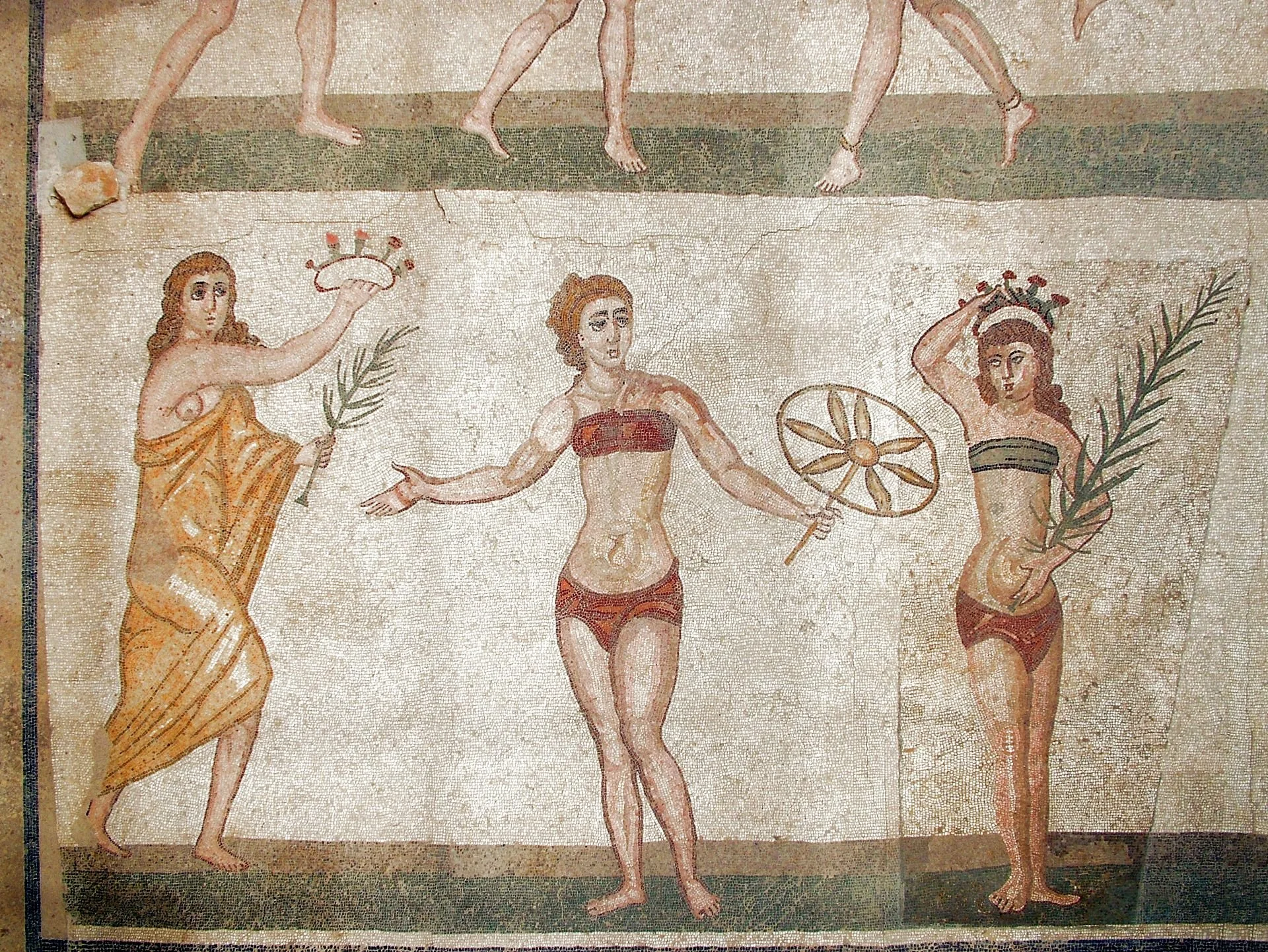
Subligaculum and strophium
The Middle Ages
From around the fifth to the fifteenth century, we know women primarily wore a smock—a long, loose, shirt-like garment—as their only undergarment. However, in more recent years, there have been discoveries indicating that some upper-class women may have worn something similar to the modern-day bra.
1500s-1700s
Over the next three centuries, we saw many changes in women’s underwear, but if you can believe it, still no actual panties! At least not panties that resemble what we wear today.
Undressed Fact: While we say “panties” in the United States to refer to our unmentionables, in UK English, you’re more likely to hear “pants” or “knickers.”
The Elizabethan Era
the golden age of British History. Along with international expansion, a rise in the arts, and Shakespeare, we have the introduction of the corset! Women desired flat chests, broad shoulders, and exaggerated waistlines.
An upper-class woman would start with a traditional smock or chemise as well as stockings of wool or silk (held up with garters and ribbons around the knee). She would also wear a farthingale at the waist, which was designed of whalebone, iron wire, and padding, and used to spread her many skirts to give her an exaggerated waist-to-hip ratio. To aid this silhouette, ladies would wear the aforementioned structured corset, sometimes two or three petticoats, as well as a kirtle, which is essentially a covering for the corset. All of these garments would be worn underneath the outer gown. Beneath the many layers, women were still virtually naked from the waist to the thigh providing easy access, if you know whatI mean…
Over the century following the Elizabethan Era, fashion became a bit more comfortable—farthingales began to disappear, and silhouettes softened slightly. Transitioning from the Stuart Period into the Georgian Period, ladies maintained corsets, underskirts, and petticoats, as well as items like buttock padding below their outer gown, yet still no panties.
The Victorian Era
Those savvy Victorian dames decided that enough was enough—the time for drawers had arrived. Drawers, named so because they were “drawn on” were the first step toward the modern-day panty. Like a loose pair of shorts, they were initially crotchless (that’s right) to allow easy bathroom use, and they tied around the waist. Drawers became Knickers or “combinations” (so no longer crotchless) around the 1820s, though they remained long and loose until the beginning of the twentieth century. Throughout the Victorian Era, women continued to wear chemises, boned corsets, stockings, and petticoats as undergarments.
Undressed Fact: Why do we say “a pair of” panties? Because the two legs of our drawers used to be two separate pieces—they truly were a pair.
20th Century
As the 1800s drew to a close (just like knickers), drawers or bloomers remained below the knee for a couple of decades. However, a new invention appeared on the horizon—the modern day brassiere. Made of two handkerchiefs joined with a ribbon, the bra was born in 1913.
The Roaring 20s
Along with almost everything else, ladies’ undergarments went through huge changes during the 1920s. The slim silhouette and flowing fabrics of the era meant that undergarments had to adapt. In addition to changes in form, a new fabric, rayon (being easy to dye), brought colors to undergarments while previously most garments had been white. Lace and embroidery also began to make an appearance.
Women wore corsets well into the 1950s, though the 20s brought about the long corset, which provided a flat, boyish figure, and the corselet, which combined the brassiere and corset. Boning also declined in popularity as women opted for more elastic materials that squashed flesh into a tube-like shape.
A flapper, of course, refused to wear corsets—how else could she dance the Charleston? It wasn’t uncommon for dance halls to have “corset check rooms” where girls could remove their corsets for dancing.
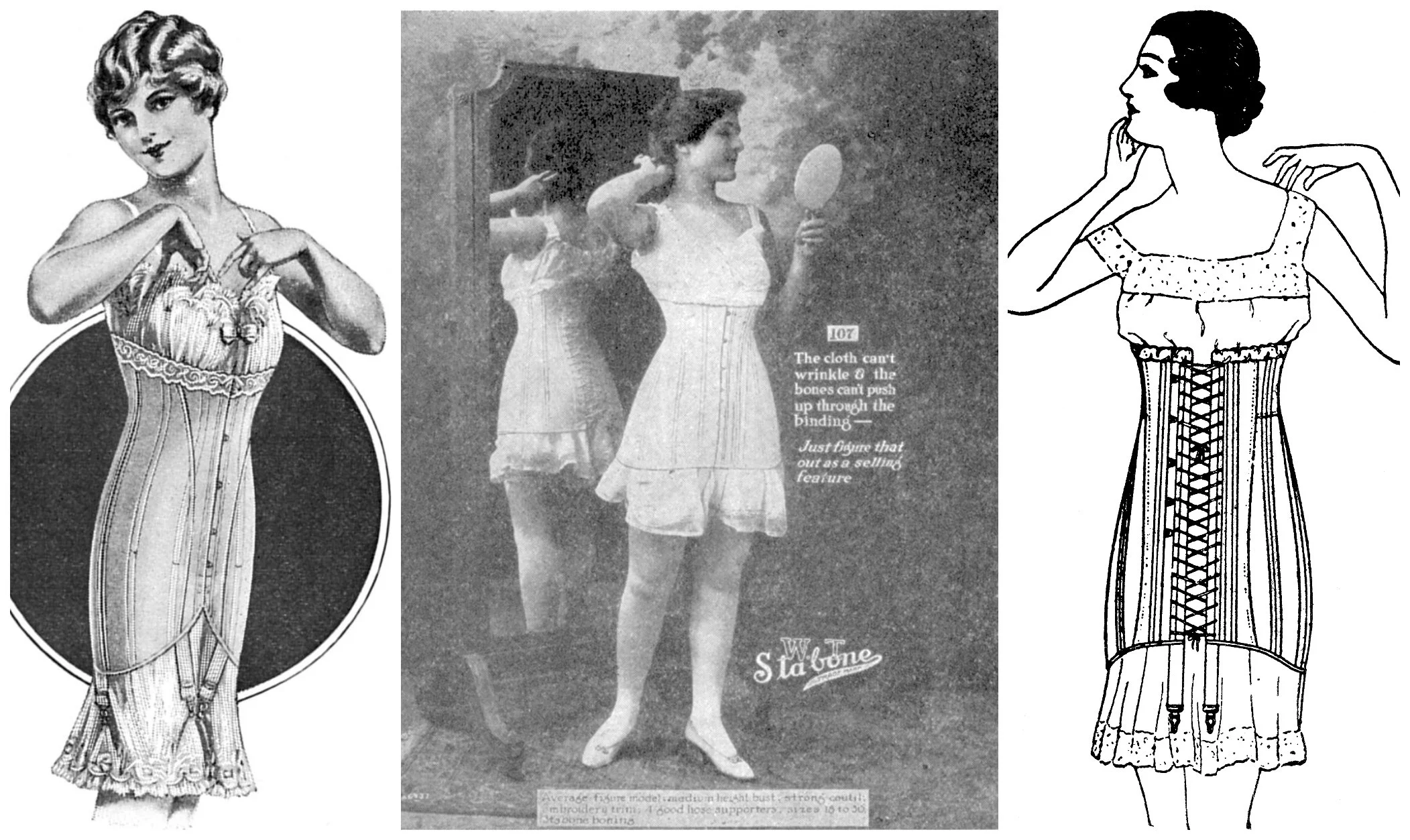
Long corsets
Brassieres during the 1920s functioned to flatten the chest rather than enhance it and often resembled elastic bandeaus held up by shoulder straps. Bust Bodices such as the Symington Side Lacer, laced up on the sides or back to really flatten “the girls".”
When it came to knickers, combination cami-knickers or step-in drawers became popular. A pair of cami-knickers combined the camisole and knickers, resembling silk overalls that cinch in at the knee. Step-in drawers were similar, though they had loose leg holes and more resembled a modern romper. All undergarments would be topped off with a slip to prevent seeing though the sheer dress fabrics of the day.
The Glamorous 30s
Thanks to Hollywood, a woman’s feminine curves began to come back into popularity during this decade. The modern idea of “separates” began to take shape—a bra and undies as two unattached pieces. Looking for a rounder and pointed bust shape and a natural waist, women wore soft wireless bras and tap pants beneath a silk or rayon chemise.
For those in need of extra shaping help, one could wear a rubberized, smooth step-in girdle. Bras also began to appear in cup sizes from A to D and offer convertible backs. Slinky dresses made of satin were all the rage, and the goal was to appear nearly au natural beneath tight fitting silhouettes.
For everyday wear, many women continued to wear metal boned corsets, but the transition to girdles occurred as the decade progressed. A full body girdle would include an attached bra and skirt with metal fasteners to keep silk stockings up.
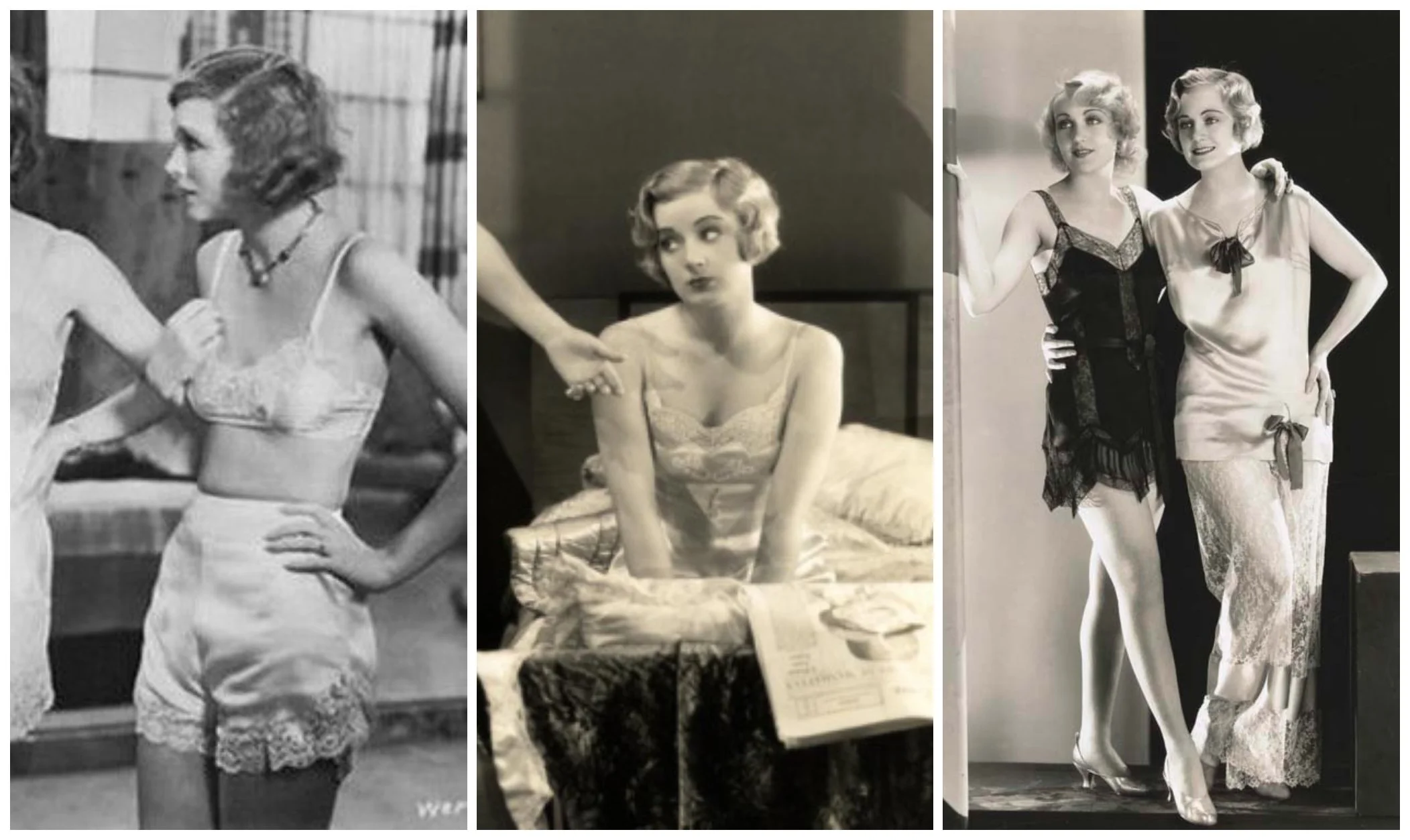
Bra & Tap Pants and Chemise from the 1930 film, Safety in Numbers
The Wartime 40s
The need for wartime materials like rubber and steel in the 40s meant that rubber girdles and metal bones corsets had to go. The lingerie of the 40s was designed to be more flexible and comfortable, because for the first time, huge numbers of women were entering the work force and needed to be able to actually move!
For every day wear, about half of women wore a once-piece bra + girdle over panties. Other options included a bandeau or longline bra and a separate girdle over panties, or a strapless bra and garter belt combination with panties—all depending on the outfit. Girdles included metal fasteners for stockings, and garter belts were used when not wearing a girdle.
Fuller figured women tended to wear more undergarments, or garments of thicker fabrics with more structure.
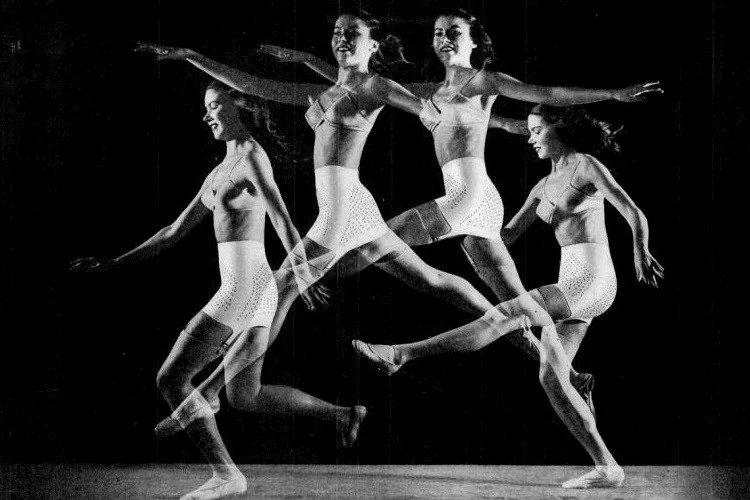
latex girdle
All 1940s bras were full coverage, and they usually came in white, ivory, or peachy-pink. They extended anywhere from one inch below the bust to all the way to the natural waist for longline bras. The latter often contained boning to help with posture and bust lift. Most average figured women wore both a longline bra and a girdle to smooth out the entire torso. Bras had a more pointed shape due to seams coming to a point, though they were not quite as cone-like as the 50s bullet bras that appeared the following decade.
Panties, or step-ins, resembled high-waisted shorts. They came up past the bellybutton and could be legless, a few inches down the thigh, or all the way to the knee. Because panties didn’t come with built-in garter straps, garter belts were worn which contained elastic to hold them up around the waist and hips.
Women in the 40s were less concerned with having small measurements all-over than with having the appearance of a nipped-in waist.
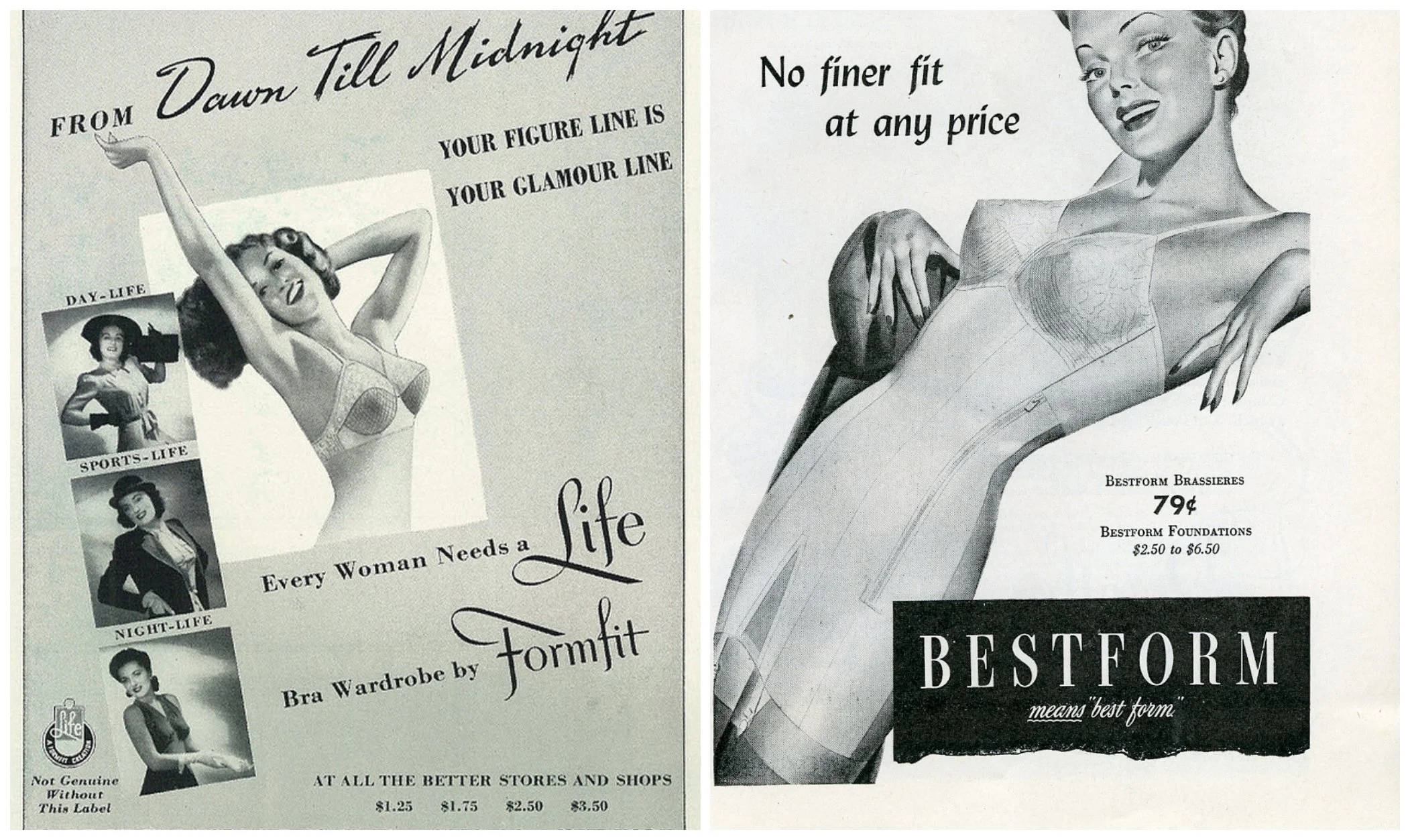
bra and all-in-one bra & girdle
slips and petticoats
The Booming 50s
The fifties were a time of great economic boom in the United States. Hollywood glamour was at a high, and women wanted big busts, small waists, and a big hips the likes of Marilyn Monroe